
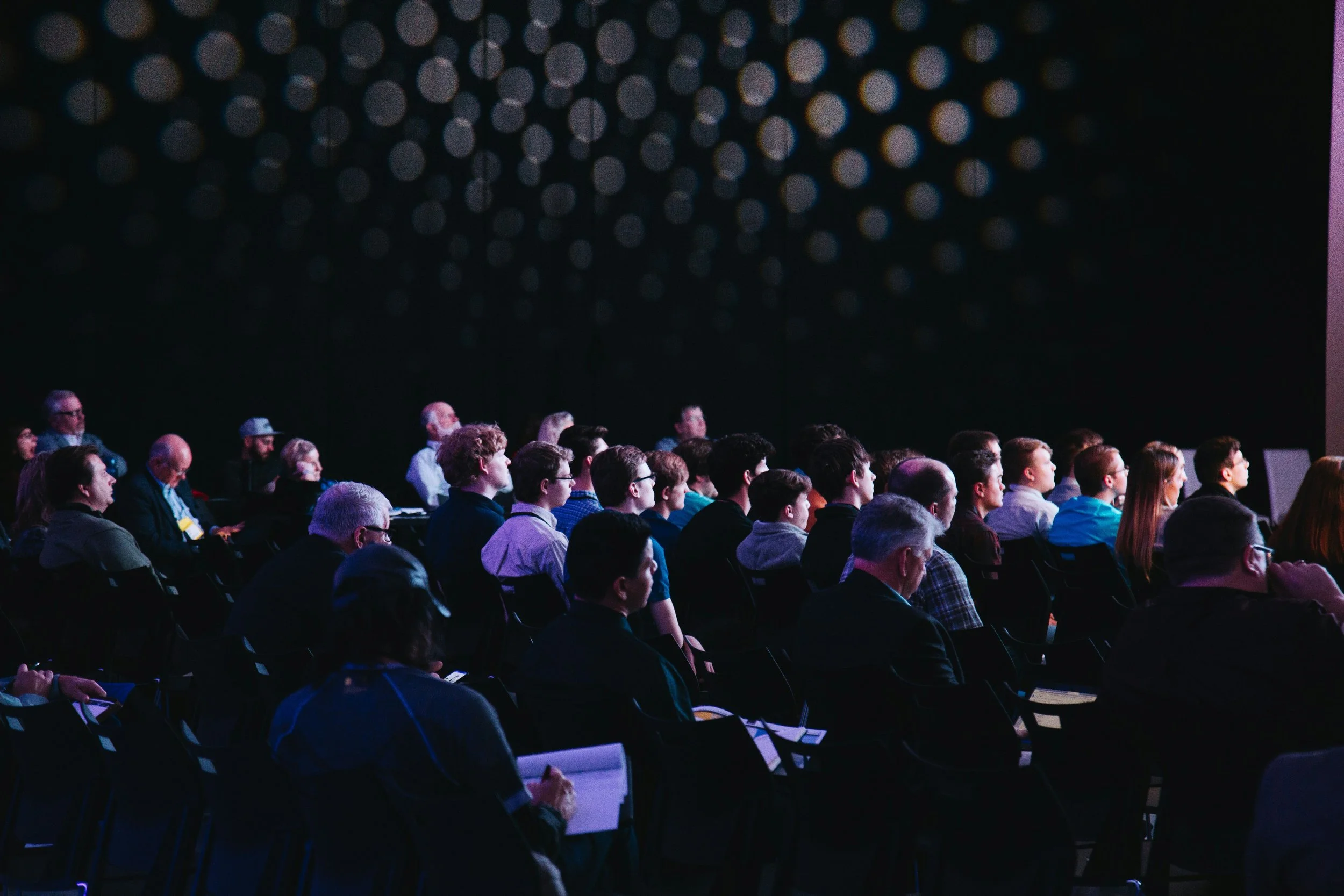
Photo by Headway on Unsplash
While facilitators hold significant control over structure and content, I’ve learned that the ultimate success of an experiential learning session is co-created through the energy, courage, and collaborative support of the participants.
Comparing two similar leadership workshops with completely different levels of audience energy proves that shared ownership and psychological safety, rather than top-down instruction alone, drive breakthrough engagement and lasting behavioral change. Attributing credit to active participants honors the true power of applied improvisation, turning supportive learning environments like our Improv Gym at The Mopco Improv Theatre into vital practice grounds for organizational agility.
Participants as Collaborative Support in Applied Improvisation Training
It’s easy as an instructor and facilitator to imagine that the success or failure of a session lies in my hands. And, of course, to some extent this is true and helpful —there is an awful lot of power in those roles:
The power to choose the content of a course
The power to tell people when and what to do
And perhaps the most enticing power of all…
The power to have people pay attention to you
That means it can be easy to take credit and blame for the outcomes of engagements. Again, this has its value. With power comes responsibility. We should hold ourselves accountable for the choices we make. And, in a number of events over the last few weeks I have been struck by how much of the success rests in the hands of the participants.
One day a few weeks ago, we had two separate deliveries for two groups that looked relatively similar on paper. We showed up with pretty similar content and energy. But the experiences couldn’t have been more different. The first left us feeling enervated and self-doubting, though the client said they were pleased and felt the objectives were met. The group was reticent and passive. Not resistant exactly, but offering the least effort they could appropriately get away with. They’re tired, the leaders said. We’ve had a number of days of meetings.
That evening, we ran another, similar workshop with a similar group. But the engagement couldn’t have been more different. Even after two full days of an offsite and a long dinner, the group was energized, enthusiastic and eager to participate. If this had been the only event of the day, I’m sure I would have taken all the credit for the success of the second program, if I hadn’t already laid some responsibility for how the program went on participants in the first.
What Happens When Participants Co-Create the Learning Environment
Let me be clear, as a performing improviser, we are careful never to "blame the audience" when doing our shows. If they don't seem entertained we can often find a reason why in our performance. But I think sometimes we fail to note the opposite: When should we acknowledge our audience for making us look way better, and for creating an environment for us to show up at our best?
With my awareness of how much the participants co-create an experience activated, I was able to appreciate the students in the University at Albany's Executive MBA program, and our in-house The Mopco Improv Theatre's Storytelling workshop, I got to witness exceptional commitment, creativity, courage and collaborative support.
I fell in love with all of my students in both these programs, and want to thank them for the learning and inspiration. So fellow facilitators, where can we note the power of the participant and give them credit?
Bringing Co-Creation Into Everyday Leadership
Whether you are leading an executive offsite, coaching a team, or running a Monday morning check-in, co-creation starts when we invite people into the room and thank them openly for showing up. Applied improvisation training sessions give teams a low-stakes space to practice those exact muscles, translating directly into stronger cross-functional collaboration, psychological safety, and adaptive problem-solving back at the office.
Key Takeaways: Co-Creation in Experiential Learning
· Facilitation is a Partnership, Not a Performance: Instructors hold significant power over a session's activities and framework, but the ultimate success of an experiential learning event is heavily co-created by the learners.
· Participant Energy Dictates the Outcome: Delivering the exact same curriculum to two different groups can yield drastically different results, proving that active participant buy-in is a key driver of the impact of a workshop.
· Credit the Room for Co-Creation: Just as improvisers avoid blaming an audience for a flat show, instructors must actively acknowledge participants for bringing the courage, creativity, and collaborative support that allow amazing learning experiences to take place.
· Action-Oriented Learning Builds Workplace Agility: Stepping into the role of an active participant in a supportive environment — whether in a university Executive MBA program, a storytelling workshop, or a Tuesday morning Improv Gym — allows professionals to expand their strategic skillsets and be ready for real-world business challenges.
Step Into the Room: Try a Free Tuesday Morning Improv Gym
Want to experience this kind of supportive learning environment for yourself, and help create it? Well, if you are anywhere near Schenectady, NY, come on by and take advantage of the Improv Gym, which is FREE and takes place every Tuesday morning at 8:30AM!
You’ll get a creative approach to team building and leadership, and each week you will leave with a new skill to flex in the real world.
